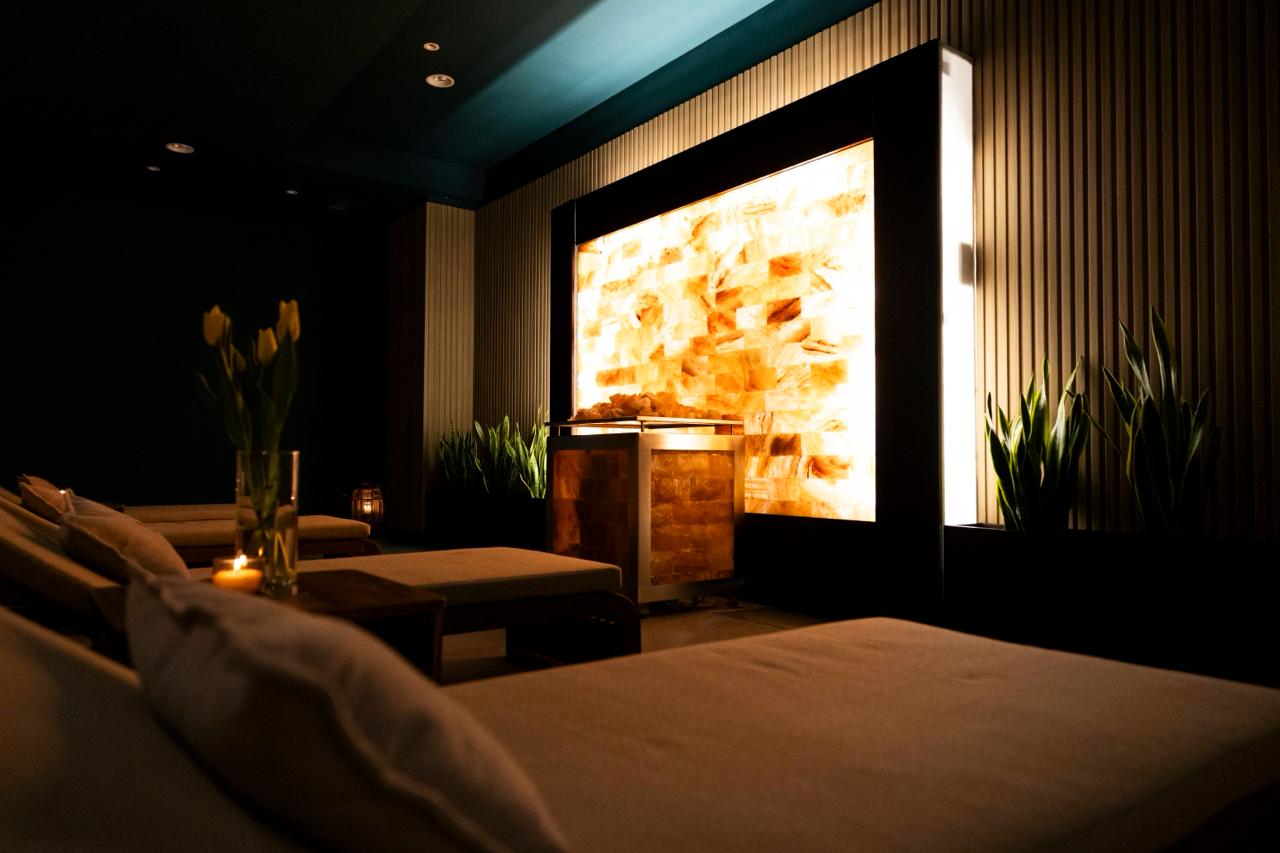
The salt room recreates the microclimate of natural salt caves in a controlled environment, a context that medical observation has long linked to a better state of health of the respiratory tract.
Origin of a practice
The intuition dates back to the mid-nineteenth century, when a Polish doctor noticed how miners in the Wieliczka rock salt mines enjoyed better respiratory health than those who worked in other types of mines, and even than the general population. From that observation was born halotherapy, which takes its name from the Greek hals, salt: a treatment that uses the inhalation of microparticles of sodium chloride to act on the airways.
The first real therapeutic structures were developed in Eastern Europe, in the natural salt caves of Silesia and Poland itself. Modern salt rooms, widespread today in wellness centers and spas, reproduce that microclimate with a micronized, certified and constantly changed rock salt aerosol.
How it affects the respiratory tract
During the session, the salt microparticles reach the depth of the respiratory system, stimulating mucociliary clearance, the natural mechanism by which the airways free themselves from excess mucus. Salt also has anti-inflammatory properties and an action that reduces the bacterial load in the breathed environment.
For these characteristics, halotherapy is proposed as a complementary treatment in the presence of recurrent colds, sinusitis, allergic rhinitis and more generally as a support for the well-being of the upper airways, without in any case replacing medical therapy prescribed for chronic or acute conditions.
The effect on the skin
The mineral salt also intervenes on the skin level: the microparticles deposited on the surface of the skin exert a slightly exfoliating action and regulate the balance of the hydrolipidic film, with an effect that many regular users describe as a sensation of softer and more relaxed skin after the first session.
Relaxation and negative ions
The closed, silent environment, at a constant temperature, in itself contributes to a relaxing effect comparable to that of other sensorial decompression practices. Added to this is the presence of negative ions, particles that salt-saturated air generates in higher concentrations than ordinary environments and which are associated, in the literature on psychophysical well-being, with a feeling of greater lightness and a perceived improvement in mood.
The typical session
A session generally lasts between thirty and forty-five minutes, during which no active action is required: you sit or lie down, naturally breathing the air in the room. For a more lasting benefit, the courses are usually structured in cycles of several weekly sessions, with results that users report from the first appointments and which tend to consolidate over time.
Who is it aimed at?
The salt room is suitable for those seeking relief for the respiratory tract during seasonal changes, for those living with chronic fatigue from stress, and more generally for those who wish to integrate a moment of low intensity quiet into their wellness routine, without physical effort required. As with any treatment involving the respiratory tract, a preventive discussion with your doctor is advisable in the presence of severe lung pathologies or conditions that require particular caution.
The air of a salt cave, rebuilt a few steps from home, remains ultimately a simple way of restoring to the body an environment that the body itself recognizes as familiar.
Ozio Salino is our Himalayan pink salt room; it clears the respiratory tract and eliminates negative ions from the environment, thus creating a profound state of relaxation and abandonment to be experienced at the end of the journey to fully enjoy all the benefits.